

by Brian Shilhavy
Many Christian Evangelical churches in the U.S. today have lost their way, and are not following the True Way, which is the narrow and lonely path that leads us to Jesus Christ and the Gospel message of salvation.
However, I believe that there are still many good people and faithful believers within these Evangelical churches, and have not yet matured enough in their faith to understand all the false ways yet that their church is leading them down.
I used to belong to and participate in Evangelical churches when I was younger, but when I began to learn the truth about pharmaceutical products and vaccines, as well as the influence of Zionism and then tried to educate others, I was no longer welcome in these institutions.
So I have been “unchurched” for a couple of decades now, and I am happy to admit that, with no remorse or shame.
Church members who do not agree with their leaders are seen as “troublemakers,” and if they are members who have a lot of friends in the church who all decide to leave the church together, they are usually accused of the sin of “splitting the church”.
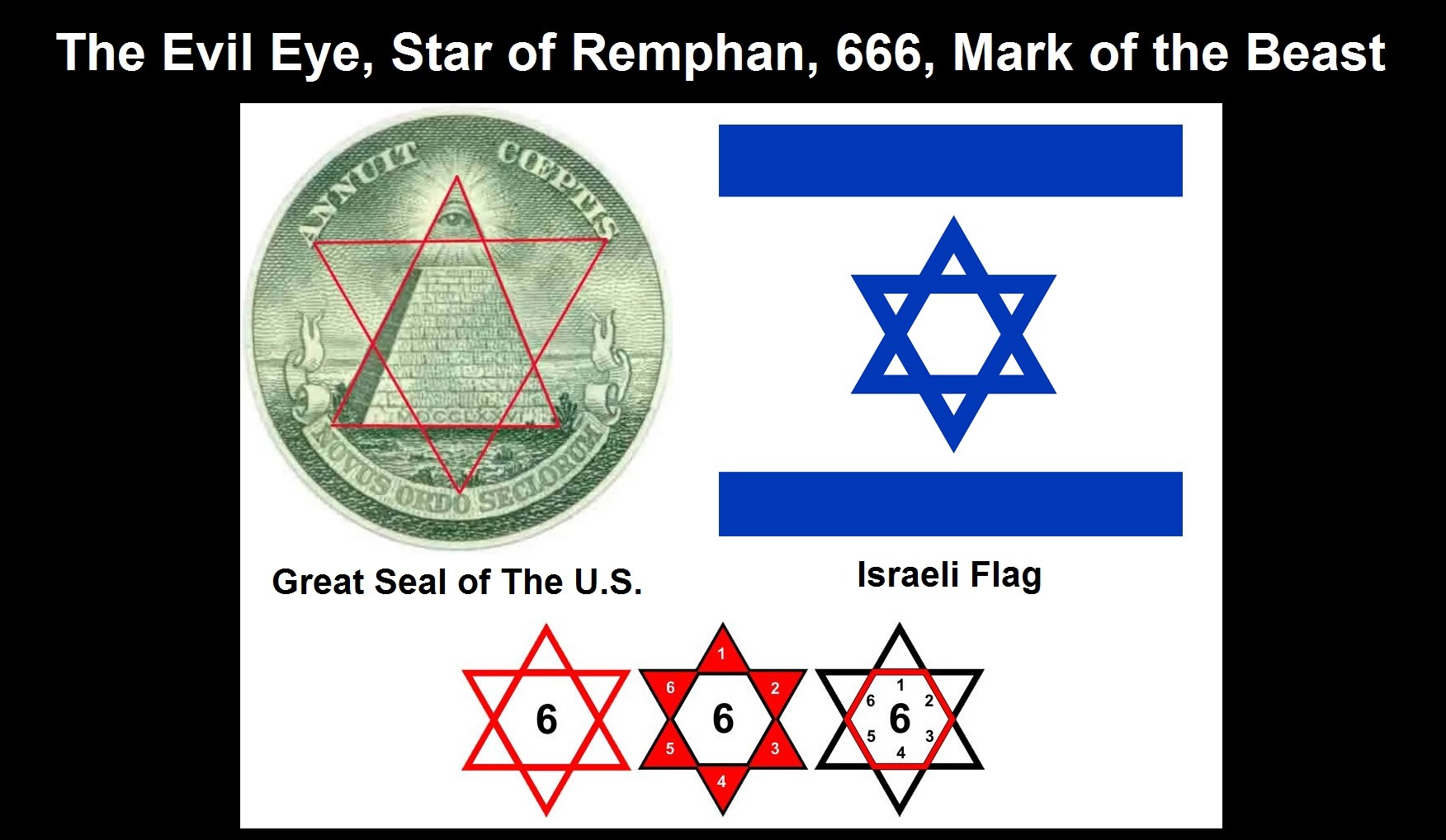
Well I can confidently say today that what is needed today in order to see a major change in the American Christian churches for the better, is LOTS of “church splits”, and a mass exit from these Synagogues of Satan by the true believers in Jesus Christ who are sealed by the Holy Spirit and have the mark of God, rather than the mark of the beast [1].
That means that the church members who are walking in darkness need to hear the true Gospel, and reject the Satanic false teachings and false prophets of those who align with Big Pharma, Child Trafficking, and the modern State of Israel today.
And as we see in the New Testament part of the Bible, that is exactly what the New Testament believers did, by preaching the Gospel to the churches of their day first, starting in those places where believers were already gathering.
Some received the Gospel, while others rejected it and turned against those who were preaching that Jesus was the Messiah, and the fulfillment of the Old Covenant’s promises to Israel, as well as all the prophecies about the Messiah.
“Church” and “Synagogue” Mean “Congregation” or “Assembly”
First, let’s clear up a misconception in modern day English and most of the English translations of the Bible. This misconception is that the English word for “synagogue” only refers to modern-day Jewish gatherings of Jews who do not believe that Jesus is the Messiah/Christ, while “church” only refers to modern-day “Christian” gatherings.
The distinction is not so clear in the original Greek texts of the Bible, however, and both Greek words, ἐκκλησία – ekklēsia for “church” and συναγωγή – sunagōgē for “synagogue”, should properly be translated as “assembly, congregation, or gathering.”
They have the same basic meaning, and can be used interchangeably. To see in your English Bible which Greek word is actually being used anytime you read “church” or “synagogue”, you can use an electronic Bible such as eSword [2].
For example, in Acts 7:38, the Greek word ekklēsia is used in this verse, but all modern English translations translate it as something like “assembly” or “congregation,” and not “church”. Here is the English Standard Version.
This is the one who was in the congregation in the wilderness with the angel who spoke to him at Mount Sinai, and with our fathers. He received living oracles to give to us. (Acts 7:38 – ESV)
The only place where I found it translated as “church” is in the older King James version:
This is he, that was in the church in the wilderness with the angel which spake to him in the mount Sina, and with our fathers: who received the lively oracles to give unto us: (Acts 7:38 – KJV)
In the modern King James version, it is changed to “congregation”.
This is he who was in the congregation in the wilderness with the Angel who spoke to him in Mount Sinai, and with our fathers, who received the living words to give to us, (Acts 7:38 – MKJV)
When you read the context here which is Stephen’s last words spoken just before he was executed by the Satanic Jews, it is obvious that the word is NOT dealing with “Christians”, because it is referencing the time when Moses received the Law of God on Mt. Sinai which began the Old Covenant.
If you search for “ekklēsia” in the Greek translation of the Old Testament, you will find it used 91 times, and translated as either “assembly” or “congregation” in English, but NEVER “church.”
The one exception where “assembly” or “congregation” is not used in the English translation of the Old Testament Greek texts, is the Book of Ecclesiastes. The title of this OT book is from “ekklēsia”, and the seven times it is used in that book it is rendered in English Apostolic Bible Polycot, which uses the Greek Septuagint and not the Masoretic Hebrew text, as ecclesiastic , which is not the “congregation” but actually King Solomon who wrote the book. The more modern translations use “Teacher” or “Preacher”.
We see something similar with how sunagōgē is translated in the newer English Bibles. Most of the time it is just translated “synagogue”, but in James 2:2 most modern English translations use “congregation” or “assembly” instead:
For if a man wearing a gold ring and fine clothing comes into your assembly, and a poor man in shabby clothing also comes in, (James 2:2)
“Synagogue” was deemed not appropriate, because James was not referring to assemblies of Jews who did not accept Jesus as the Messiah, but to mixed congregations of believers who DID believe Jesus was the Messiah, both Jews and Greeks (non-Jews).
So both “ekklēsia” and “sunagōgē” are interchangeable, and the proper, non-political English translation should be “congregation, assembly, gathering.”
Therefore, when we read the English translations of what Jesus Christ said to John in Revelation when addressing the 7 congregations in chapters 2 and 3:
“‘I know your tribulation and your poverty (but you are rich) and the slander of those who say that they are Jews and are not, but are a synagogue of Satan.” (Revelation 2:9)
And:
“Behold, I will make those of the synagogue of Satan who say that they are Jews and are not, but lie—behold, I will make them come and bow down before your feet, and they will learn that I have loved you.” (Revelation 3:9)
we can just as easily use the word “church” as well to be consistent with modern English Bible translations, when the more accurate translation is congregation, assembly, gathering, etc.
“Christian” Was a Word Never Used by the New Testament Congregations of Themselves
The main word that is improperly used the most today in Christianity is the word “Christian.” Most people today think that all the believers in the New Testament records who gathered together in the congregations, were “Christians”, whether they were Jewish or Greek.
But this is not what we find in the New Testament at all!
Let’s start with the first non-Jews who became believers and received the Holy Spirit of God as recorded in the New Testament.
The man was a Roman soldier, a Centurion, who lived north of Israel in Caesarea.
It is an extremely important event in the New Testament, because it is the first recorded time that Jews went into the home of a non-Jew (Gentile), and ate with them and worshiped with them.
The story is found in Acts chapter 10:
At Caesarea there was a man named Cornelius, a centurion of what was known as the Italian Cohort, a devout man who feared God with all his household, gave alms generously to the people, and prayed continually to God.
About the ninth hour of the day he saw clearly in a vision an angel of God come in and say to him, “Cornelius.”
And he stared at him in terror and said, “What is it, Lord?”
And he said to him,
“Your prayers and your alms have ascended as a memorial before God. And now send men to Joppa and bring one Simon who is called Peter. He is lodging with one Simon, a tanner, whose house is by the sea.”
When the angel who spoke to him had departed, he called two of his servants and a devout soldier from among those who attended him, and having related everything to them, he sent them to Joppa.
The next day, as they were on their journey and approaching the city, Peter went up on the housetop about the sixth hour to pray.
And he became hungry and wanted something to eat, but while they were preparing it, he fell into a trance and saw the heavens opened and something like a great sheet descending, being let down by its four corners upon the earth.
In it were all kinds of animals and reptiles and birds of the air. And there came a voice to him:
“Rise, Peter; kill and eat.”
But Peter said,
“By no means, Lord; for I have never eaten anything that is common or unclean.”
And the voice came to him again a second time,
“What God has made clean, do not call common.”
This happened three times, and the thing was taken up at once to heaven.
Now while Peter was inwardly perplexed as to what the vision that he had seen might mean, behold, the men who were sent by Cornelius, having made inquiry for Simon’s house, stood at the gate and called out to ask whether Simon who was called Peter was lodging there.
And while Peter was pondering the vision, the Spirit said to him,
“Behold, three men are looking for you. Rise and go down and accompany them without hesitation, for I have sent them.”
And Peter went down to the men and said,
“I am the one you are looking for. What is the reason for your coming?”
And they said,
“Cornelius, a centurion, an upright and God-fearing man, who is well spoken of by the whole Jewish nation, was directed by a holy angel to send for you to come to his house and to hear what you have to say.”
So he invited them in to be his guests.
The next day he rose and went away with them, and some of the brothers from Joppa accompanied him. And on the following day they entered Caesarea.
Cornelius was expecting them and had called together his relatives and close friends.
When Peter entered, Cornelius met him and fell down at his feet and worshiped him.
But Peter lifted him up, saying,
“Stand up; I too am a man.”
And as he talked with him, he went in and found many persons gathered. And he said to them,
“You yourselves know how unlawful it is for a Jew to associate with or to visit anyone of another nation, but God has shown me that I should not call any person common or unclean.
So when I was sent for, I came without objection. I ask then why you sent for me.”
And Cornelius said,
“Four days ago, about this hour, I was praying in my house at the ninth hour, and behold, a man stood before me in bright clothing and said, ‘Cornelius, your prayer has been heard and your alms have been remembered before God.
Send therefore to Joppa and ask for Simon who is called Peter. He is lodging in the house of Simon, a tanner, by the sea.’
So I sent for you at once, and you have been kind enough to come. Now therefore we are all here in the presence of God to hear all that you have been commanded by the Lord.”
So Peter opened his mouth and said:
“Truly I understand that God shows no partiality, but in every nation anyone who fears him and does what is right is acceptable to him.
As for the word that he sent to Israel, preaching good news of peace through Jesus Christ (he is Lord of all), you yourselves know what happened throughout all Judea, beginning from Galilee after the baptism that John proclaimed: how God anointed Jesus of Nazareth with the Holy Spirit and with power.
He went about doing good and healing all who were oppressed by the devil, for God was with him. And we are witnesses of all that he did both in the country of the Jews and in Jerusalem.
They put him to death by hanging him on a tree, but God raised him on the third day and made him to appear, not to all the people but to us who had been chosen by God as witnesses, who ate and drank with him after he rose from the dead.
And he commanded us to preach to the people and to testify that he is the one appointed by God to be judge of the living and the dead. To him all the prophets bear witness that everyone who believes in him receives forgiveness of sins through his name.”
While Peter was still saying these things, the Holy Spirit fell on all who heard the word. And the believers from among the circumcised who had come with Peter were amazed, because the gift of the Holy Spirit was poured out even on the Gentiles.
For they were hearing them speaking in tongues and extolling God. Then Peter declared,
“Can anyone withhold water for baptizing these people, who have received the Holy Spirit just as we have?”
And he commanded them to be baptized in the name of Jesus Christ. Then they asked him to remain for some days. (Acts 10:1-48 – ESV)
There are a couple of things to notice in this very historical event. First is the fact that God had to put Peter through a specific vision to convince him to abandon his Satanic Jewish ways, and view Gentiles as people equal to himself and the Jews.
Secondly, once the Holy Spirit came into the hearts of the Gentiles, everybody in that house became “believers,” mixed group of believers from Jewish and Gentile backgrounds.
Notice how Luke, who wrote the book of Acts, referred to the Jewish believers: “the believers from among the circumcised“.
Cornelius was referred to as “devout” and one who feared God, and “gave alms generously to the people, and prayed continually to God.”
When the angel who appeared to him said: “Your prayers and your alms have ascended as a memorial before God,” it meant that God accepted or “remembered” them, even though they were not offered in the Temple in Jerusalem.
This means that Cornelius was not a Jewish convert, or a “proselyte”, because he was not circumcised, and therefore was forbidden to enter the Temple grounds in Jerusalem.
The term “Christian” was never used of either group, but it came up in the next chapter of Acts, Acts 11.
The First Occurrence of the Term “Christian”
When Peter got back to Israel after staying in the home of Gentiles, and actually eating with them and worshiping with them, he had a lot of explaining to do to the Jews back in Jerusalem.
Here is Acts chapter 11:
Now the apostles and the brothers who were throughout Judea heard that the Gentiles also had received the word of God. So when Peter went up to Jerusalem, the circumcision party criticized him, saying,
“You went to uncircumcised men and ate with them.”
But Peter began and explained it to them in order….
…. If then God gave the same gift to them as he gave to us when we believed in the Lord Jesus Christ, who was I that I could stand in God’s way?”
When they heard these things they fell silent. And they glorified God, saying,
“Then to the Gentiles also God has granted repentance that leads to life.”
(Acts chapter 11)
After Peter convinced his fellow circumcised Jewish brothers that Gentiles were, in fact, now part of the Gospel, Acts chapter 11 documents more mixed congregations of Jews and Gentiles meeting together.
Now those who were scattered because of the persecution that arose over Stephen traveled as far as Phoenicia and Cyprus and Antioch, speaking the word to no one except Jews.
But there were some of them, men of Cyprus and Cyrene, who on coming to Antioch spoke to the Hellenists also, preaching the Lord Jesus.
And the hand of the Lord was with them, and a great number who believed turned to the Lord.
The report of this came to the ears of the “ekklēsia” (congregation) in Jerusalem, and they sent Barnabas to Antioch.
When he came and saw the grace of God, he was glad, and he exhorted them all to remain faithful to the Lord with steadfast purpose, for he was a good man, full of the Holy Spirit and of faith.
And a great many people were added to the Lord.
So Barnabas went to Tarsus to look for Saul, and when he had found him, he brought him to Antioch. For a whole year they met with the church and taught a great many people.
And in Antioch the disciples were first called Christians. (Acts 11:19-26)
So this is the first of 3 times where we find the word “Christian” in the New Testament documents. And as you can read, it is used in the passive voice “were called” where the subject of who called them this term is not stated. It was probably from those outside of the congregations, because they could not figure out what to call the Gentile uncircumcised believers, since the term “Jew” would be inappropriate for them.
Who were the “Christians”?
In Acts chapter 13 we have the record of the first of the “missionary expeditions” starting from Antioch that spread into Asia Minor, which is present day Turkey.
Paul was selected as the leader of this first missionary trip to preach the Gospel throughout Asia minor, and he was also a leader of the congregation meeting in Antioch.
Since the term “Christian” was first used in Antioch, if it was an appropriate title to use in reference to Gentile believers, then surely Paul would start using it when traveling through the Roman Empire, right?
But no, Paul actually NEVER used this word, because he obviously saw no distinction between Jewish and Gentile believers, as he constantly states throughout his letters that “All are One in Christ”, regardless of whether they were circumcised believers (Jews) or not (Gentiles).
The second time the word “Christian” appears in the Bible is towards the end of the book of Acts, when the Jewish leaders had Paul arrested and he was imprisoned in Caesarea to protect from being executed by the Satanic Jews.
Paul was a legal Roman citizen, and tried to escape the persecution of the Satanic Jews by appealing his case to Caesar, the Roman Emperor’s court, and so he was waiting to be escorted to the city of Rome by Roman soldiers.
Just before he left, the Roman Governor over Palestine, Festus, received the Jewish King Agrippa as a visitor, and asked him if he wanted to meet Paul and listen to him, before he left as a prisoner to Rome.
King Agrippa agreed:
So on the next day Agrippa and Bernice came with great pomp, and they entered the audience hall with the military tribunes and the prominent men of the city.
Then, at the command of Festus, Paul was brought in. And Festus said,
“King Agrippa and all who are present with us, you see this man about whom the whole Jewish people petitioned me, both in Jerusalem and here, shouting that he ought not to live any longer.
But I found that he had done nothing deserving death. And as he himself appealed to the emperor, I decided to go ahead and send him.
But I have nothing definite to write to my lord about him. Therefore I have brought him before you all, and especially before you, King Agrippa, so that, after we have examined him, I may have something to write.”
So Agrippa said to Paul,
“You have permission to speak for yourself.”
Then Paul stretched out his hand and made his defense:
“I consider myself fortunate that it is before you, King Agrippa, I am going to make my defense today against all the accusations of the Jews, especially because you are familiar with all the customs and controversies of the Jews. Therefore I beg you to listen to me patiently.
My manner of life from my youth, spent from the beginning among my own nation and in Jerusalem, is known by all the Jews. They have known for a long time, if they are willing to testify, that according to the strictest party of our religion I have lived as a Pharisee.
And now I stand here on trial because of my hope in the promise made by God to our fathers, to which our twelve tribes hope to attain, as they earnestly worship night and day. And for this hope I am accused by Jews, O king!
I myself was convinced that I ought to do many things in opposing the name of Jesus of Nazareth. And I did so in Jerusalem. I not only locked up many of the saints in prison after receiving authority from the chief priests, but when they were put to death I cast my vote against them.
And I punished them often in all the synagogues and tried to make them blaspheme, and in raging fury against them I persecuted them even to foreign cities….”
Paul then tells about his conversion on the road to Damascus, preaches the Gospel to the King which led Festus to say that Paul’s great learning has made him “out of his mind”, and then Paul asks King Agrippa a question, and read his reply:
But Paul said,
“I am not out of my mind, most excellent Festus, but I am speaking true and rational words. For the king knows about these things, and to him I speak boldly.
For I am persuaded that none of these things has escaped his notice, for this has not been done in a corner.
King Agrippa, do you believe the prophets? I know that you believe.”
And Agrippa said to Paul,
“In a short time would you persuade me to be a Christian?”
And Paul said,
“Whether short or long, I would to God that not only you but also all who hear me this day might become such as I am—except for these chains.”
Then the king rose, and the governor and Bernice and those who were sitting with them. And when they had withdrawn, they said to one another,
“This man is doing nothing to deserve death or imprisonment.”
And Agrippa said to Festus,
“This man could have been set free if he had not appealed to Caesar.” (Acts 26 & 27)
This King Agrippa was not well liked by the Jews, because they did not consider him a true Jew with an ethnic line back to Abraham, but rather a kind of half-breed Indumean and Samaritan, like a dirty “Gentile.”
And remember, the term “Christian” was only used for Gentile believers, never Jewish believers.
So of course Paul would NOT answer “yes” to his question as to whether Paul was trying to convert him to a “Christian.”
Instead he replies: “I would to God that not only you but also all who hear me this day might become such as I am—except for these chains.”
Paul was a Jew. And not just an ordinary Jew, but actually a Jewish scholar in the party of the Pharisees, and of course he was circumcised, as Agrippa would have been also.
Paul wanted King Agrippa to become a Jewish believer who followed the Jewish sect called “The Way”, even though the King was probably just a religious Jew, and not an actual ethnic Jew, and he was appointed to his position by Rome, and not well liked by the Jewish people.
Then we have the third and final instance in the Greek texts of the New Testament where the word “Christian” is used:
If you are insulted because of the name of Christ, you are blessed, for the Spirit of glory and of God rests on you.
If you suffer, it should not be as a murderer or thief or any other kind of criminal, or even as a meddler.
However, if you suffer as a Christian, do not be ashamed, but praise God that you bear that name. (1 Peter 4:14-16)
Peter was a circumcised Jew, and it is probable that he is addressing both Gentile believers and Jewish believers here. Gentile believers probably would not be “insulted” if they were called “Christians”, but Jewish believers probably would be.
Again, these sentences are in the passive voice: “if you are insulted” and “if you suffer,” where the subject, the ones using those terms, are not identified.
But in the entire rest of the New Testament, the term “Christian” is never used again.
Preaching the Gospel to Congregations of Believers in the Roman Empire
When the Jews Paul and Barnabas became the first “missionaries” to travel to other places to “preach the Gospel,” they always started with the existing congregation of believers, who were mainly Jews and maybe some Jewish converts (proselytes) who were circumcised, and probably even “devout people who feared God” like Cornelius was.
Their reception was almost ALWAYS divided, with the true believers accepting the Gospel, and the Satanic Jews not accepting it.
They were most certainly “church splitters”!
Here is one of the first recorded examples in Acts about the strategy of preaching the “Gospel” to the congregation of believers first, and the actual message is recorded here of “the Gospel” that Paul preached from Acts chapter 13.
Paul, a recognized Jewish scholar, was actually asked to speak by the rulers of the congregation.
From Perga they went on to Pisidian Antioch. On the Sabbath they entered the synagogue (congregation) and sat down.
After the reading from the Law and the Prophets, the synagogue rulers sent word to them, saying,
“Brothers, if you have a message of encouragement for the people, please speak.”
Standing up, Paul motioned with his hand and said:
“Men of Israel and you Gentiles who worship God, listen to me!
The God of the people of Israel chose our fathers; he made the people prosper during their stay in Egypt, with mighty power he led them out of that country, he endured their conduct for about forty years in the desert, he overthrew seven nations in Canaan and gave their land to his people as their inheritance.
All this took about 450 years. After this, God gave them judges until the time of Samuel the prophet.
Then the people asked for a king, and he gave them Saul son of Kish, of the tribe of Benjamin, who ruled forty years.
After removing Saul, he made David their king. He testified concerning him: ‘I have found David son of Jesse a man after my own heart; he will do everything I want him to do.’
From this man’s descendants God has brought to Israel the Savior Jesus, as he promised.
Before the coming of Jesus, John preached repentance and baptism to all the people of Israel. As John was completing his work, he said: ‘Who do you think I am? I am not that one. No, but he is coming after me, whose sandals I am not worthy to untie.’
Brothers, children of Abraham, and you God-fearing Gentiles, it is to us that this message of salvation has been sent. The people of Jerusalem and their rulers did not recognize Jesus, yet in condemning him they fulfilled the words of the prophets that are read every Sabbath.
Though they found no proper ground for a death sentence, they asked Pilate to have him executed. When they had carried out all that was written about him, they took him down from the tree and laid him in a tomb.
But God raised him from the dead, and for many days he was seen by those who had traveled with him from Galilee to Jerusalem. They are now his witnesses to our people.
We tell you the good news: What God promised our fathers he has fulfilled for us, their children, by raising up Jesus.
As it is written in the second Psalm:
‘You are my Son; today I have become your Father.’
The fact that God raised him from the dead, never to decay, is stated in these words:
‘I will give you the holy and sure blessings promised to David.’
So it is stated elsewhere:
‘You will not let your Holy One see decay.’
For when David had served God’s purpose in his own generation, he fell asleep; he was buried with his fathers and his body decayed.
But the one whom God raised from the dead did not see decay.
Therefore, my brothers, I want you to know that through Jesus the forgiveness of sins is proclaimed to you. Through him everyone who believes is justified from everything you could not be justified from by the law of Moses.
Take care that what the prophets have said does not happen to you:
‘Look, you scoffers, wonder and perish, for I am going to do something in your days that you would never believe, even if someone told you.'”
As Paul and Barnabas were leaving the synagogue, the people invited them to speak further about these things on the next Sabbath.
When the congregation was dismissed, many of the Jews and devout converts to Judaism followed Paul and Barnabas, who talked with them and urged them to continue in the grace of God.
On the next Sabbath almost the whole city gathered to hear the word of the Lord.
When the Jews saw the crowds, they were filled with jealousy and talked abusively against what Paul was saying.
Then Paul and Barnabas answered them boldly:
“We had to speak the word of God to you first. Since you reject it and do not consider yourselves worthy of eternal life, we now turn to the Gentiles.
For this is what the Lord has commanded us: “‘I have made you a light for the Gentiles, that you may bring salvation to the ends of the earth.'”
When the Gentiles heard this, they were glad and honored the word of the Lord; and all who were appointed for eternal life believed.
The word of the Lord spread through the whole region.
But the Jews incited the God-fearing women of high standing and the leading men of the city. They stirred up persecution against Paul and Barnabas, and expelled them from their region.
So they shook the dust from their feet in protest against them and went to Iconium. And the disciples were filled with joy and with the Holy Spirit. (Acts 13:14-52)
Here is another example from Acts in the city of Corinth:
Paul entered the synagogue (congregation) and spoke boldly there for three months, arguing persuasively about the kingdom of God.
But some of them became obstinate; they refused to believe and publicly maligned the Way.
So Paul left them.
He took the disciples with him and had discussions daily in the lecture hall of Tyrannus. This went on for two years, so that all the Jews and Greeks who lived in the province of Asia heard the word of the Lord. (Acts 19:8-10)
This then, was the method that “the Gospel” was preached throughout the Roman empire at that time, always starting with the existing congregations first, and then once they were expelled from there, they just went somewhere else, taking as many new believers with them as dared to follow them, in the face of heavy persecution and even risk to their own lives.
Notice that Luke did NOT write in Acts 19 that the Jews attacked the “Christians.” No, he writes they refused to believe and publicly maligned the Way.
The Way was considered a sect of the Jewish religion. For more on this, please read:
Fact Check: “Christianity” and the Christian Religion is NOT Found in the Bible – The Person Jesus Christ Is [3]
Preaching the Gospel to Congregations of Evangelical Zionist Christians Today
One of the distinguishing characteristics of the early believers is that they carried on the same ministry of miraculous healing and the casting out of demons that Jesus started.
This same ministry blueprint of “preaching the Gospel” to existing congregation of believers needs to start happening today to the members of the Evangelical Christian Churches, who desperately need to hear the REAL Gospel message.
The true believers that are already associated with these Churches need to understand the true Gospel themselves, then preach it to their leaders and fellow church members. They need to renounce Zionism, stop practicing idolatry by trusting their health and well-being to Big Pharma, and STOP kidnapping other people’s children through Foster Care and Adoption programs.
If they don’t receive you, then shake the dust off of your shoes and LEAVE!
And take as many members of the congregation as you can, because their very spiritual lives are at stake here.
The Zionists have the money and the greater numbers, just as they did in the First Century. But they cannot defeat the great power of the Holy Spirit, and the harvest fields are now ripe for harvest, just as they were in the First Century.
We need the Lord of the Harvest to send forth his messengers to harvest these souls. Just don’t expect Satan and his Zionists to stand by and do nothing to stop you.
Suffering and persecution will soon be the norm for all true believers in Jesus Christ, and most of us will have to go underground, but that’s what we signed up for.
Then he said to them: “Nation will rise against nation, and kingdom against kingdom. There will be great earthquakes, famines and pestilences in various places, and fearful events and great signs from heaven.
But before all this, they will lay hands on you and persecute you. They will deliver you to synagogues (churches, congregations) and prisons, and you will be brought before kings and governors, and all on account of my name.
This will result in your being witnesses to them.
But make up your mind not to worry beforehand how you will defend yourselves. For I will give you words and wisdom that none of your adversaries will be able to resist or contradict.
You will be betrayed even by parents, brothers, relatives and friends, and they will put some of you to death.
All men will hate you because of me.
But not a hair of your head will perish. By standing firm you will gain life. (Luke 21:10-19)
Comment on this article at Created4Health.org [4].
This article was written by Human Superior Intelligence (HSI) [5]
[5]
 [6]
[6]
 [7]
[7]
See Also:
Understand the Times We are Currently Living Through
New FREE eBook! Restoring the Foundation of New Testament Faith in Jesus Christ – by Brian Shilhavy [8]
 [8]
[8]
Who are God’s “Chosen People”? [9]
 [9]
[9]
KABBALAH: The Anti-Christ Religion of Satan that Controls the World Today [10]
 [10]
[10]
Christian Teaching on Sex and Marriage vs. The Actual Biblical Teaching [11]
 [11]
[11]
Exposing the Christian Zionism Cult [12]
 [12]
[12]
The Bewitching of America with the Evil Eye and the Mark of the Beast [13]
 [13]
[13]
Jesus Christ’s Opposition to the Jewish State: Lessons for Today [14]
 [14]
[14]
Identifying the Luciferian Globalists Implementing the New World Order – Who are the “Jews”? [15]
 [15]
[15]
The Brain Myth: Your Intellect and Thoughts Originate in Your Heart, Not Your Brain [16]
 [16]
[16]
What is the Condition of Your Heart? The Superiority of the Human Heart over the Human Brain [17]
 [17]
[17]
The Seal and Mark of God is Far More Important than the “Mark of the Beast” – Are You Prepared for What’s Coming? [1]
 [1]
[1]
The Satanic Roots to Modern Medicine – The Image of the Beast? [18]
 [18]
[18]
Medicine: Idolatry in the Twenty First Century – 10-Year-Old Article More Relevant Today than the Day it was Written [19]
 [19]
[19]
 [20]
[20]
Having problems receiving our emails? See:
 [21]
[21]
How to Beat Internet Censorship and Create Your Own Newsfeed [21]
We Are Now on Telegram [22]. Video channels at Bitchute [23], and Odysee [24].
If our website is seized and shut down, find us on Telegram [22], as well as Bitchute [23] and Odysee [24] for further instructions about where to find us.
If you use the TOR Onion browser [25], here are the links and corresponding URLs to use in the TOR browser [25] to find us on the Dark Web: Health Impact News [26], Vaccine Impact [27], Medical Kidnap [28], Created4Health [29], CoconutOil.com [30].