by Brian Shilhavy
Health Impact News
Building huge new data centers is the only way for AI to continue raking in huge profits in 2026 for those making the AI chips and software that run the new power-hungry LLM AI programs.
Many local communities and States across the U.S. are pushing back by opposing the building of these data centers in their communities, however. It is likely to even be a key issue in the 2026 mid-term elections.
The Trump Administration is countering this opposition by attempting to take over the nation’s electrical grid, and put into place Federal regulations regarding AI that override local State regulations.
Former Federal Energy Regulatory Commission (FERC) chairman Mark Christie, a Republican, reportedly stated in the Wall Street Journal that this:
“is one of the biggest federal power grabs at the expense of the states I have seen in 21 years as a state and federal utility regulator” (Source [2].)
The Wall Street Journal [2] also reported what Trump’s rationale was to take over the nation’s power grid to fuel AI and bypass State laws:
“We have to be unified,” Trump said, noting that China didn’t have to contend with state legislatures.
This is Silicon Valley’s dream: get rid of elections and install a Monarchy. See:
Big Tech “Far-Right” Billionaires want to Eliminate Politicians and “Democracy” as They Believe They can Run the World Better by Themselves [3]
Here are some more excerpts from the Wall Street Journal article on federalizing the U.S. power grid, courtesy of MSN [2]:
States see a federal power grab in clash over AI data centers
At a conference of state utility regulators in Seattle, a group of Trump administration officials got an earful of complaints about a plan the White House is pushing for the federal government to take control of part of the country’s power grid in the service of artificial intelligence.
Their concerns stem from instructions Energy Secretary Chris Wright recently gave to the Federal Energy Regulatory Commission, which is known as FERC and oversees wholesale power in the U.S., to draft new rules that would give it oversight of how giant data centers connect to the power grid.
The process is typically overseen by states.
During the conference last month, regulators told administration energy officials such as James Danly, deputy secretary of the Energy Department, that Wright’s plan violates the 1935 Federal Power Act, which carves out the separation of oversight of the grid between state and federal governments, according to people familiar with the conversations.
By overseeing how data centers hook up to the grid, federal regulators could make it easier and faster for data centers to construct their own power supply, administration officials have argued.
They have said the rule could turbocharge data center growth as AI giants such as Google, Amazon, Meta and OpenAI open up their trillion-dollar pocketbooks to build power plants and potentially help solve supply-chain bottlenecks that have slowed growth of new generation capacity.
Companies such as Trump Media & Technology Group and Alphabet-backed fusion-energy company TAE Technologies, which agreed to a $6 billion merger, are betting the data-center boom will continue for years.
The move comes amid heightened tensions between the federal government and states over AI oversight.
Florida Gov. Ron DeSantis, a Republican, recently unveiled state legislation to curb AI’s impact on consumers and to prohibit “utilities from charging Florida residents more to support hyperscale data center development.”
Trump signed an executive order earlier this month that aims to override state laws on artificial intelligence.
It would allow the Justice Department to punish states with rules deemed restrictive for AI, in a move to bring the U.S. under one federal standard.
“We have to be unified,” Trump said, noting that China didn’t have to contend with state legislatures.
The administration’s plan “is one of the biggest federal power grabs at the expense of the states I have seen in 21 years as a state and federal utility regulator” that will result in unnecessary litigation, said former FERC Chairman Mark Christie, a Republican. (Full article [2].)
As I have previously reported, there are many obstacles to the lofty goals of Wall Street investors wanting to put up these huge data centers, including the lack of human labor needed to run them. See:
The AI Revolution is About to Crash due to a Lack of Human Labor [4]
There are many now on Wall Street, however, who see the dangers ahead in the continual investment of data centers, as this article published today on MarketWatch shows.
The AI gravy train for power stocks is over. Investors will now focus on who’s getting paid, strategist says.
The companies selling the shovels will be the ones to invest in, says Matthew Tuttle
By Barbara Kollmeyer
Excerpts:
With the easy money having been made this year on power and electricity companies linked to AI, investors will need a much more selective strategy to see gains in the sector for 2026.
That’s according to Tuttle Capital Management’s chief executive officer and chief investment officer, Matthew Tuttle, who predicts the “scarcity stampede” that caused solar, gas and coal companies to surge this year will dissipate.
“In 2026 the market won’t ask ‘is AI big?’ It’ll ask ‘who’s actually getting paid, and when?’ Tuttle wrote in a blog post.
He notes that valuations for many AI power winners are already pricing in near perfection, which means more good news will be needed to lift shares, but far less is required to drive them lower.
That’s as those companies face bottlenecks from lack of contractors, skilled labor, equipment and transmission to deliver power to compute, he said.
Tuttle rattled off a list of the biggest potential losers next year: companies that claim to be AI power developers, but with no actual sales; speculative names within the small modular reactors space lacking actual deliveries; and “any project that depends on perfect financing+perfect permitting+perfect grid access.”
He suggests focusing on second-order companies “selling the shovels,” such as those with signed contracts and long-term power purchase agreements who get paid no matter whether the tenant is OpenAI, Meta or whoever wins the model race.
Full article [5].
The Trump Administration has also Propped up the Failing EV Battery Industry by Having the U.S. Military Buy Them
The building of huge data centers is not the only technology sector that Trump is trying to take over with the U.S. Government. So too is the EV (electrical vehicle) battery industry, which is now being awarded military contracts to build the batteries for drones and data centers instead.
Rebranded as Defense Manufacturers, Next-Gen Battery Startups Are Finally Earning Revenue
Excerpts:
Drones, AI data centers and the power grid are almost all anyone in the battery industry can talk about.
The reason is what the three industries have in common: They are bedrock parts of the economy and military, and they rely on batteries from China.
In an atmosphere of rising tensions with China, those shared qualities have created sudden demand—and elusive revenue—for next-generation battery startups that have struggled to find customers amid the slow growth of the electric vehicle industry.
Almost none of the U.S.-based battery startups to emerge over the last decade and a half are profitable, and some went bankrupt this year as investor funds dried up.
The latest is San Francisco-based battery swapping startup Ample, which filed for bankruptcy Dec. 16.
But the demand for drone and stationary storage batteries for AI data centers and the grid has delivered the first commercial revenue for the survivors.
Earlier this month, Factorial Energy, a Massachusetts-based developer of lithium-metal anodes, said it will go public in a SPAC by the middle of 2026; and Israeli fast-charge battery developer StoreDott said it will list in a SPAC in the second quarter of 2026.
Both startups are aiming at defense industry customers, in addition to EVs.
Full article [6] (Subscription needed.)
The Trump Administration is Also Trying to Prop Up the Cryptocurrency Market
2025 has not been a very good year for the value of cryptocurrencies, as I have recently reported. See:
Is the Crypto Ponzi Scheme Finally Coming to an End? [7]
So the Silicon Valley-funded White House is trying to prop that up also, as the Trump family is heavily invested in crypto, with their own Stablecoins.
Binance Promotes Trump Family’s Stablecoin With 20% Yield
Binance, the world’s largest crypto exchange, said Tuesday it will start offering users up to 20% annualized yield on USD1, the stablecoin issued by President Donald Trump’s family crypto venture World Liberty Financial.
The promotion on Binance, set to last for a month, is designed to help drive usage of USD1. The market circulation of USD1 jumped to $2.9 billion on Wednesday from $2.7 billion on Tuesday, making it the 6th largest stablecoin in the world.
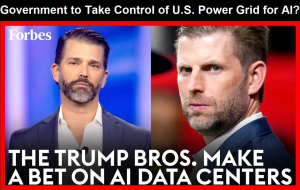
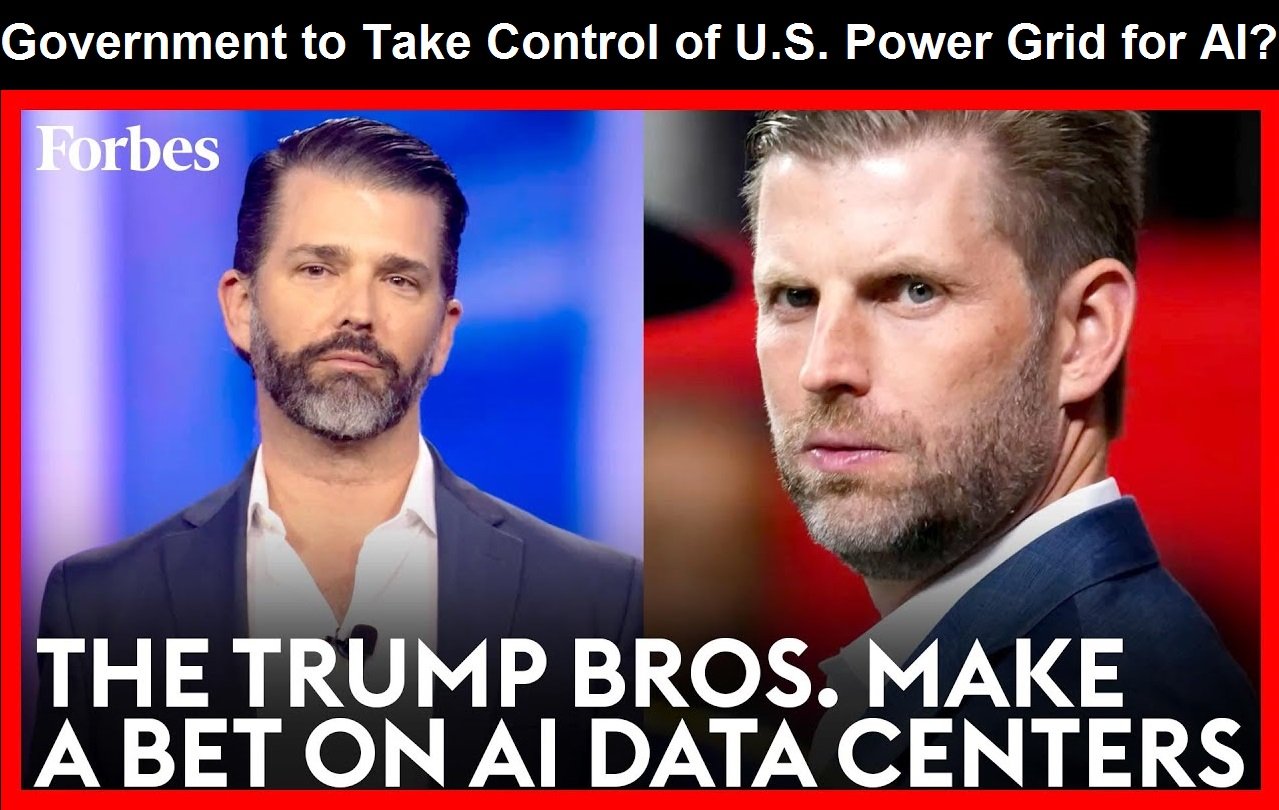
“Nothing says Christmas like real-world adoption. USD1 running a massive holiday campaign on Binance is just the beginning,” Donald Trump Jr., co-founder of World Liberty, said in a tweet.
Source [8].
How did Trump’s White House influence this, one may ask?
They influenced this by having President Trump pardon Binance’s CEO Changpeng Zhao in October, who had previously pleaded guilty to enabling money laundering.
Trump pardons convicted Binance founder Changpeng Zhao
President Donald Trump has pardoned Binance founder Changpeng Zhao, who had previously pleaded guilty to enabling money laundering while heading the cryptocurrency exchange, the White House said Thursday.
The pardon of Zhao, widely known as CZ, came two months after The Wall Street Journal reported that the Trump family’s own crypto venture, which has generated about $4.5 billion since the 2024 election, has been helped by “a partnership with an under-the-radar trading platform quietly administered by Binance.”
Trump, asked later Thursday why he pardoned Zhao, said,
“I don’t know, he was recommended by a lot of people.”
“A lot of people say that he wasn’t guilty of anything,” Trump said.
“And so I gave him a pardon at the request of a lot of very good people.”
Full article [9].
How Long can the Federal Government Subsidize the Lies of Big Tech?
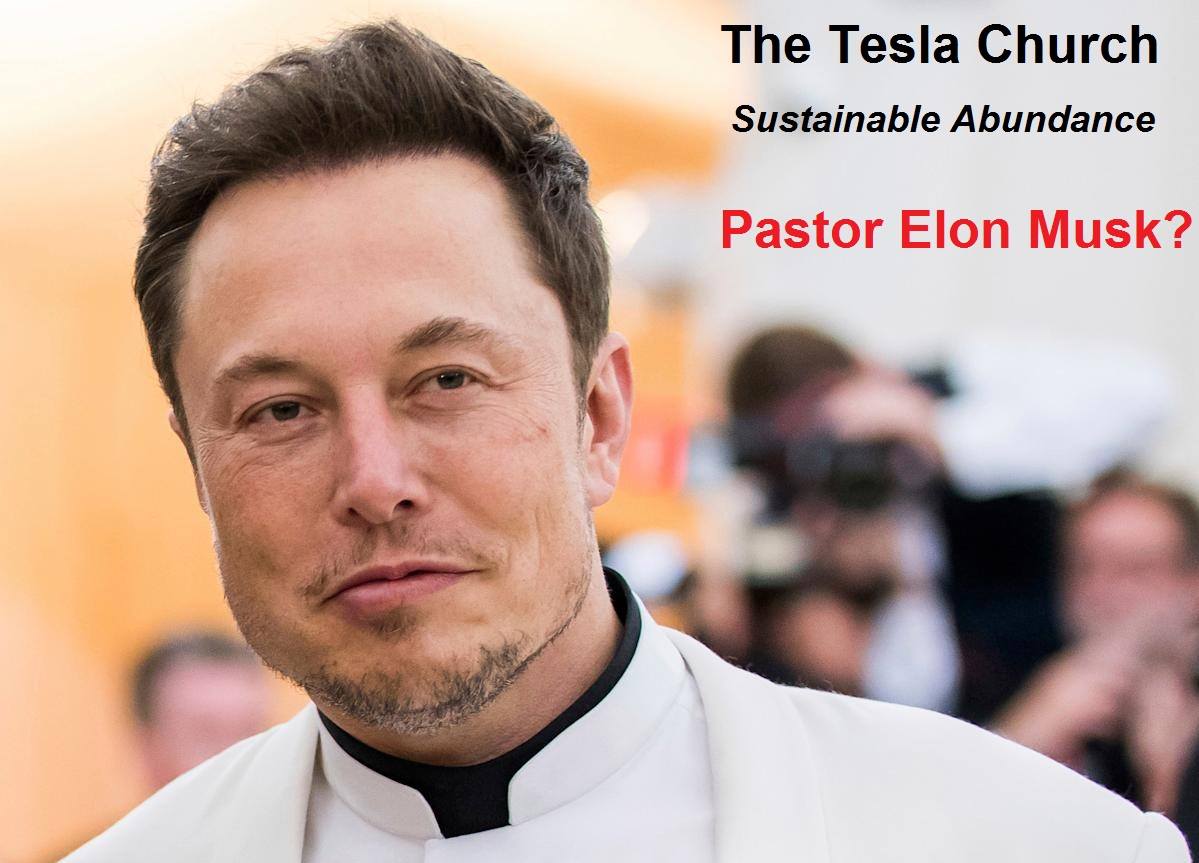
Image Source [10].
While the Trump Administration has pulled the plug on subsidies for Electronic Vehicles (EVs), due to low sales since the majority of the public now has come to realize that EVs are not all that they are advertised to be, they continue to try and subsidize all the private investments in AI as the money in Silicon Valley is starting to dry up, forcing many to take on debt to try and keep up with the insane amount of spending on AI for the past 3 years.
Cracks are starting to appear in the public’s trust in these AI hucksters who continually lie about the future, such as Elon Musk.
This was published on The Information yesterday:
How Elon Musk’s Promises for Self-Driving, AI and Robots Clashed With Reality
By Theo Wayt
Excerpts:
Whether you consider Elon Musk a visionary or a liar, he has a long record of publicly setting aggressive deadlines that his companies don’t meet. Barring any big breakthroughs over the next few days, the 2025 list will include high-profile promises on robotics manufacturing, robotaxis and AI models that fell short.
On one hand, that’s business as usual for the Musk companies. But the stakes have risen drastically as investors have propelled Tesla, SpaceX and xAI valuations higher.
One of the most critical areas to Musk’s success is Tesla’s autonomous taxi service and self-driving software, given declining demand for its electric vehicles. Tesla will report fourth quarter delivery figures Friday. Analysts expect they will show 2025 has been the second full year in a row of falling vehicle deliveries.
Musk has repeatedly walked back or missed self-imposed 2025 targets for Robotaxis and other self-driving vehicles…
In July, Musk said he expected Tesla’s Robotaxi service to be available to half the U.S. population by the end of 2025, “subject to regulatory approvals.”
Then in October, Musk dialed back his Robotaxi goal to launching in eight to 10 U.S. metro areas by the end of 2025.
But as of late December, Tesla still has not expanded Robotaxi outside of Austin and San Francisco, and still has human supervisors in all customer rides in both cities, according to reports from users.
Musk also made audacious promises about the self-driving software in private Tesla vehicles this year.
In April, he promised a massive technological leap in Tesla‘s driving software in 2025, saying drivers in many U.S. cities would be able to “go to sleep in your car and wake up at your destination” by the end of the year.
That has not been the case—Tesla’s driving software still requires supervision from drivers.
Elsewhere at Tesla, the company has fallen short of production goals for its Optimus humanoid robot, which Musk has said will one day account for the vast majority of the company’s value.
In March, Musk said that Tesla would produce 5,000 Optimus robots by the end of 2025. Tesla then slashed its production goal to 2,000 before cutting it further.
It also delayed expanding production of Optimus due to technical challenges, especially issues with its hands.
Musk and SpaceX have also said that in 2026 Optimus will go to Mars aboard SpaceX’s Starship. SpaceX’s website still says the mission is on track for next year and features renderings of Optimus walking on Mars.
However, Musk has been downplaying the chances that such a mission to Mars will happen. In August, he said there was a “slight chance” that a Starship “crewed by Optimus” could happen in November or December 2026, but said that three-and-a-half years into the future was a more likely target.
In recent months, Musk has been talking less about Mars and more about data centers in space and near-term missions to the Moon, a key priority for the Trump administration.
Full article [11].
If the federal government, under Trump, does take over the power grid in the U.S. to satisfy Silicon Valley and their desire to build these huge data centers, 2026 could become very interesting.
Since everything this administration does to promote Big Tech and AI is excused away as being part of our “national security” blaming China for threatening us simply because China can build the same technology better, and cheaper (and sometimes even free as “open source”), then what do you think is going to happen if a national crisis happens that puts a strain on the power grid of the U.S.?
Will they make sure everyone in the communities where these data centers are located get to keep their lights on, or will they let the public go dark, with no electricity and no Internet, while they keep the data centers operating, doing who knows what in the darkness and out of sight of the public?
Like 2020 when Trump locked down the nation and destroyed many “non-essential” businesses, the public has to be ready to NOT COMPLY with Trump’s edicts, which most assuredly will be wrapped up in “emergency orders” that bypass your Constitutional rights.
Support local efforts in your community to prevent the construction of these data centers, and use cash as much as possible, staying away from digital currencies and those businesses that require you to use them.
The only reason these Satanists got away with the COVID Scam, was because the public complied, starting in China.
If the public does NOT comply, however, they are powerless to enforce their tyrannical edicts.
Stock up on candles and matches, have enough food and water stored, and just ride out the storm, enduring the discomfort. Short-term discomfort is far better than long-term compliance, as those who are still suffering from the effects of the COVID shots, and know they are, will probably testify to.
The Government can only offer you slavery disguised as “freedom,” because true freedom of any kind comes only from Jesus Christ, who offers you the legal redemption of your souls, which nobody operating in Satan’s world system can offer to you.
 [12]
[12]
What is True Freedom? [12]
Comment on this article at HealthImpactNews.com [13].
This article was written by Human Superior Intelligence (HSI) [14]
[14]
 [15]
[15]
 [16]
[16]
See Also:
Understand the Times We are Currently Living Through
New FREE eBook! Restoring the Foundation of New Testament Faith in Jesus Christ – by Brian Shilhavy [17]
 [17]
[17]
What Kind of Person did Jesus Say was True with no Injustice in Them? [18]
 [18]
[18]
KABBALAH: The Anti-Christ Religion of Satan that Controls the World Today [19]
 [19]
[19]
Christian Teaching on Sex and Marriage vs. The Actual Biblical Teaching [20]
 [20]
[20]
Exposing the Christian Zionism Cult [21]
 [21]
[21]
The Bewitching of America with the Evil Eye and the Mark of the Beast [22]
 [22]
[22]
Jesus Christ’s Opposition to the Jewish State: Lessons for Today [23]
 [23]
[23]
Identifying the Luciferian Globalists Implementing the New World Order – Who are the “Jews”? [24]
 [24]
[24]
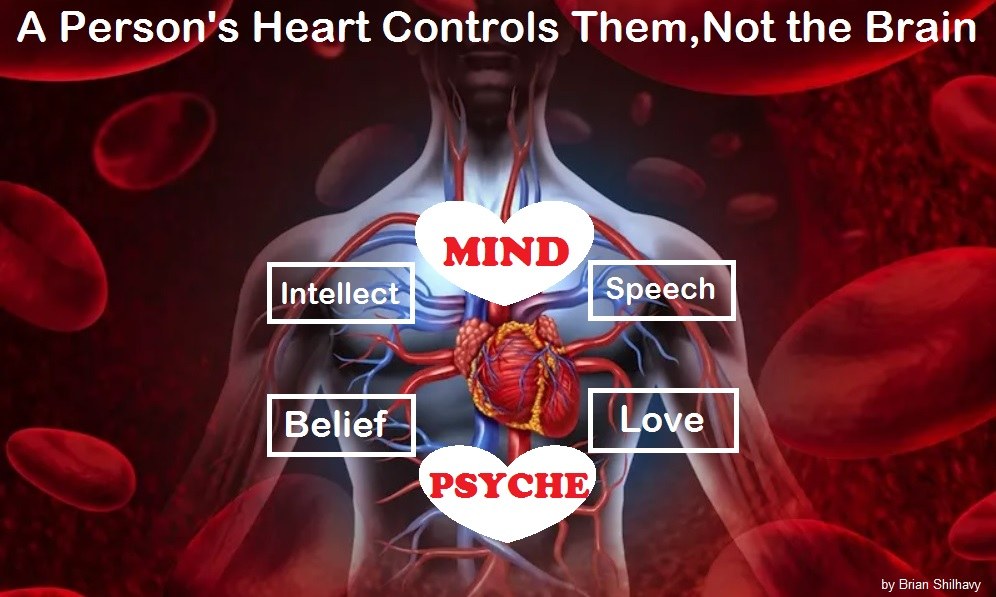
The Brain Myth: Your Intellect and Thoughts Originate in Your Heart, Not Your Brain [25]
 [25]
[25]
What is the Condition of Your Heart? The Superiority of the Human Heart over the Human Brain [26]
 [26]
[26]
The Seal and Mark of God is Far More Important than the “Mark of the Beast” – Are You Prepared for What’s Coming? [27]
 [27]
[27]
The Satanic Roots to Modern Medicine – The Image of the Beast? [28]
 [28]
[28]
Medicine: Idolatry in the Twenty First Century – 10-Year-Old Article More Relevant Today than the Day it was Written [29]
 [29]
[29]
 [30]
[30]
Having problems receiving our emails? See:
 [31]
[31]
How to Beat Internet Censorship and Create Your Own Newsfeed [31]
We Are Now on Telegram [32]. Video channels at Bitchute [33], and Odysee [34].
If our website is seized and shut down, find us on Telegram [32], as well as Bitchute [33] and Odysee [34] for further instructions about where to find us.
If you use the TOR Onion browser [35], here are the links and corresponding URLs to use in the TOR browser [35] to find us on the Dark Web: Health Impact News [36], Vaccine Impact [37], Medical Kidnap [38], Created4Health [39], CoconutOil.com [40].